Nature-based solution tested to tackle floating pennywort
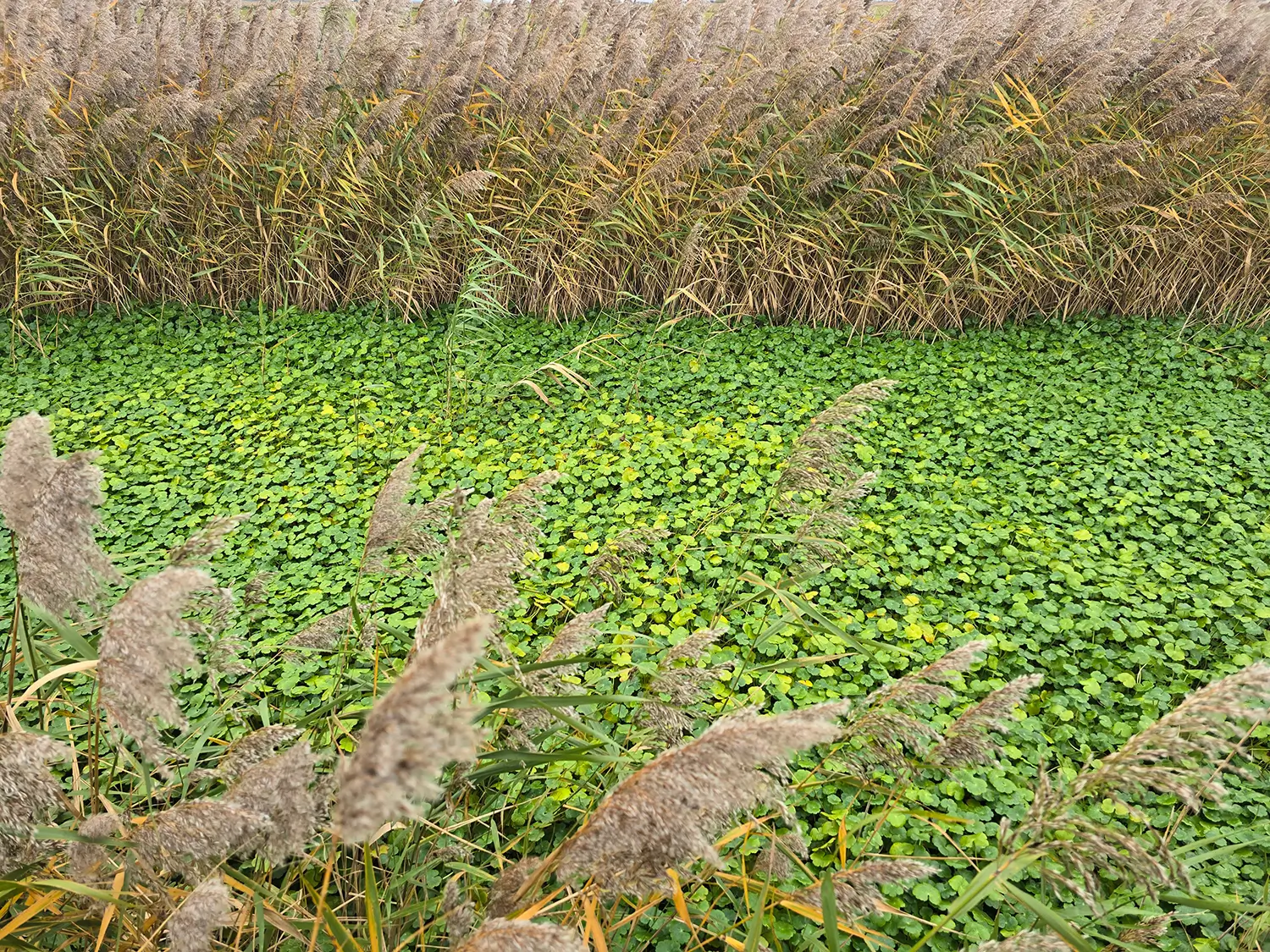
Floating pennywort is one of the UK’s most problematic aquatic invasive species. It forms dense mats that block light, reduce oxygen levels, and slow water flow, affecting both wildlife and the effective management of watercourses. At Seasalter, this invasive plant has been impacting a network of RSPB reserve land, main rivers, and Board-managed watercourses for a number of years.
Traditional control methods, such as mechanical removal and handpulling, are resource intensive and often only provide short term results. To explore a more sustainable solution, the North Kent Marshes Water Level Management Board (NKMWLMB) has worked in partnership with the Environment Agency, Natural England, the RSPB, local landowners, and CABI to trial a biological control approach.
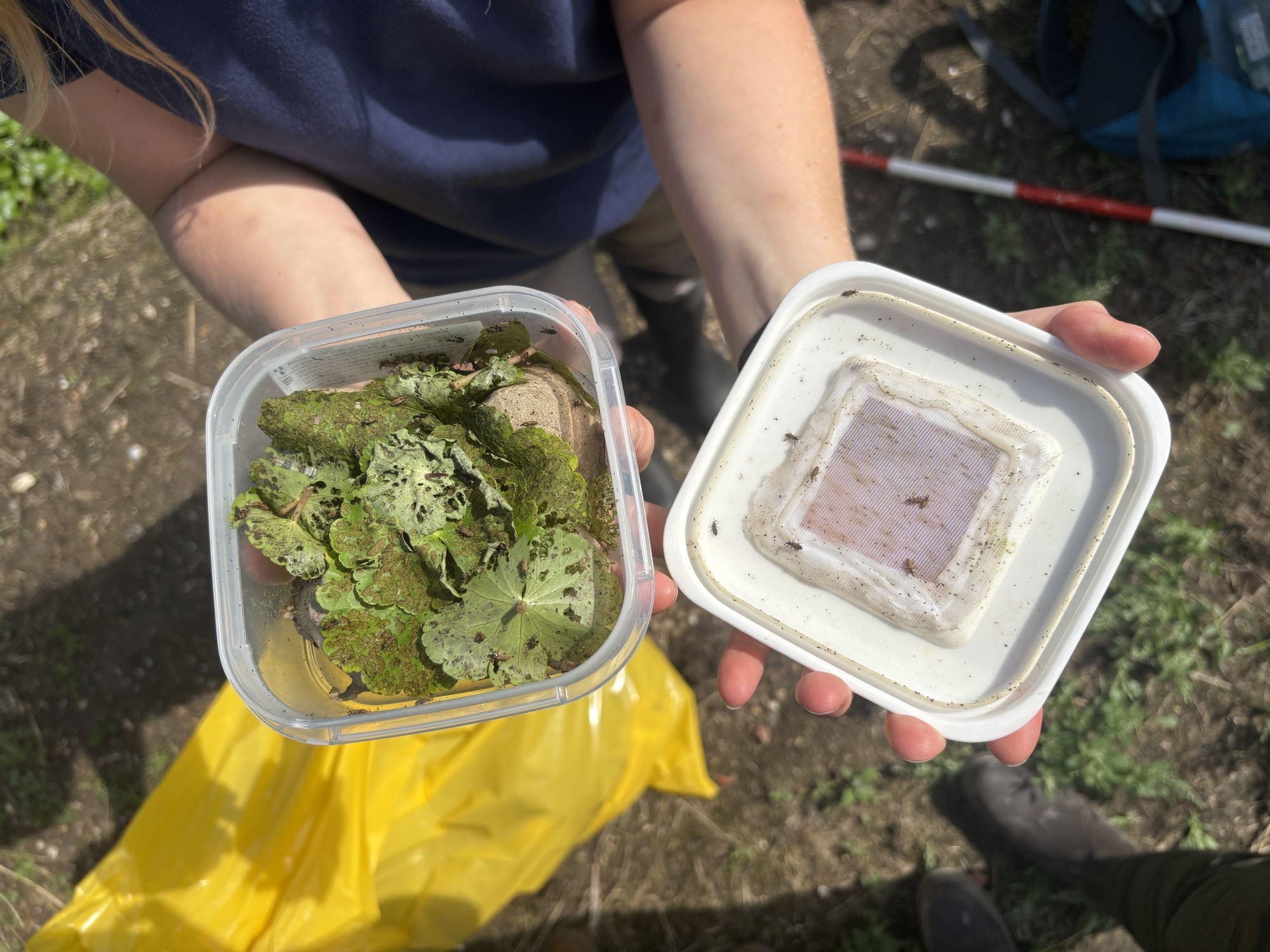
In summer 2025, a specialist South American weevil was introduced to affected watercourses. The weevil feeds exclusively on floating pennywort, with adults damaging leaves and stems and larvae burrowing into the plant, weakening it and reducing its ability to spread.
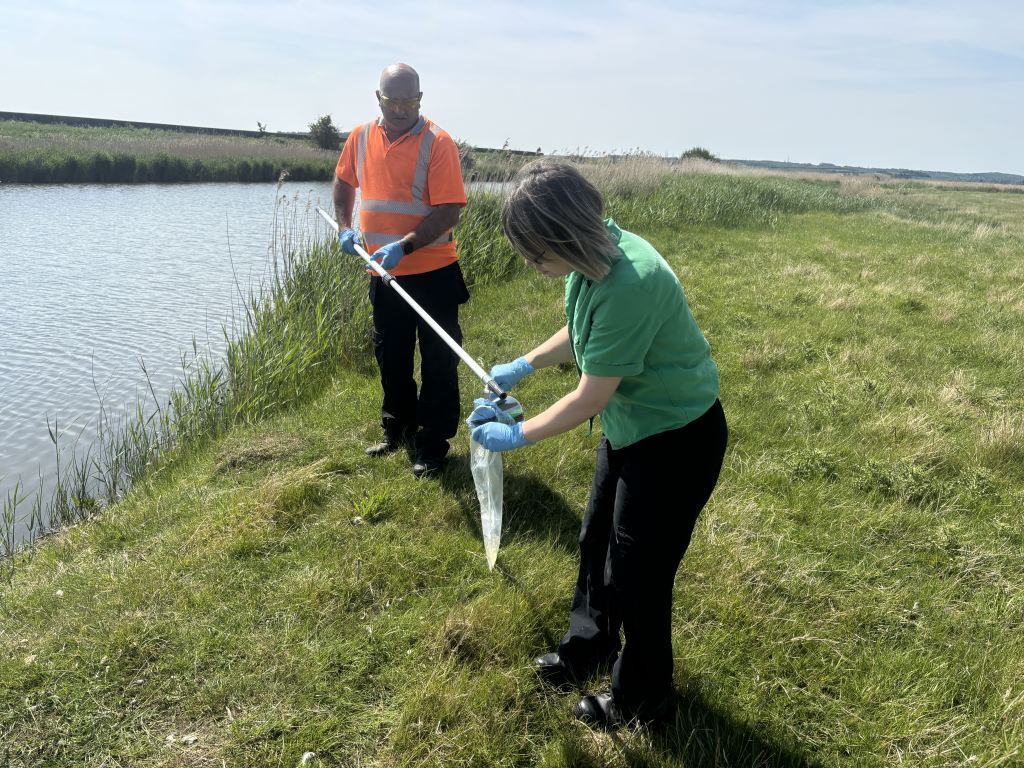
Monitoring is carried out every 8–10 weeks using photographic surveys and biomass checks to assess the weevil’s establishment and impact. Monitoring undertaken in late summer and autumn 2025 showed encouraging early signs, including visible plant damage and small gaps forming within dense mats. As expected, activity slowed over the winter period.
As temperatures begin to rise in spring 2026, further monitoring will assess how successfully the weevils have overwintered and resumed activity. This will help determine the longer-term effectiveness of this approach.
This project builds on successful trials elsewhere in the UK and demonstrates how partnership working can support practical, nature-based solutions. If successful, this approach could provide a more sustainable and cost-effective way to manage floating pennywort across lowland waterways.